
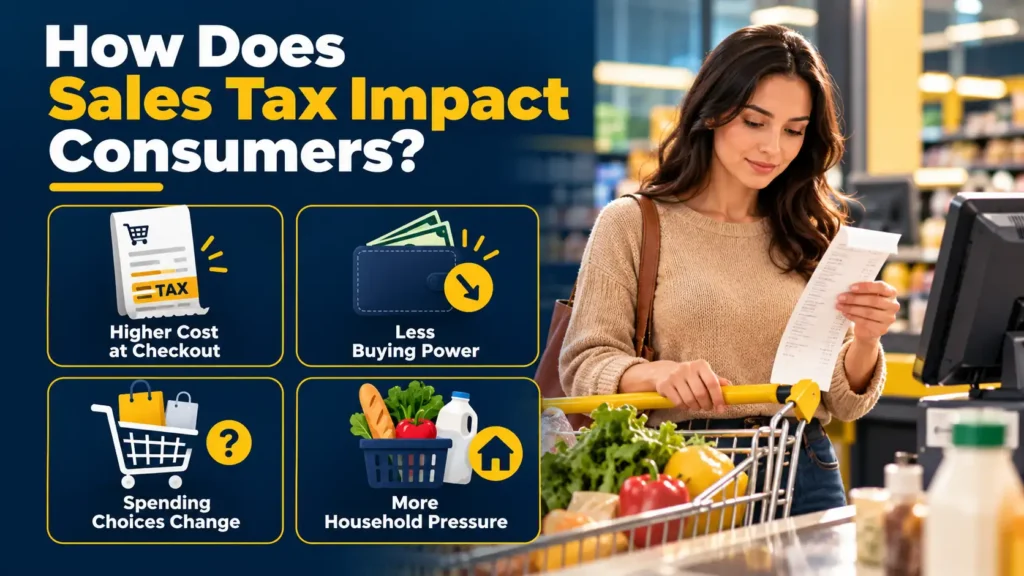
Sales tax impacts consumers by increasing the final cost of taxable goods and services. It reduces buying power because the same budget must cover both the purchase and the tax. Higher costs can influence what you buy, where you shop, and whether you delay a purchase.
In the United States, sales tax is often added at checkout rather than included in the displayed price. For example, a $100 taxable purchase with an 8% sales tax costs $108. That extra $8 leaves less money for other expenses. Sales tax can also take a larger share of lower-income households’ earnings because they generally spend more of their income.
The impact depends on your location, the applicable tax rate, and which purchases are taxable. Some necessities qualify for exemptions or reduced rates, while sales tax revenue helps fund public services. Understanding these rules helps you compare full prices, plan your budget, and make informed buying decisions.
What Is Sales Tax and How Does It Work?
Sales tax is a tax charged on certain goods and services when consumers buy them. The seller usually collects it during the sale and sends it to the appropriate tax authority. The amount is commonly calculated as a percentage of the taxable purchase price. The applicable rate can include state and local taxes, depending on the location.
Sales tax differs from income tax. Income tax applies to earnings, while sales tax applies to taxable purchases. The sales tax rate on a purchase usually does not depend on how much the shopper earns. Not every purchase is taxable. States set different rules for goods, services, and exemptions. The Tax Foundation’s explanation of sales tax provides an overview of how this retail tax works.
How Does Sales Tax Directly Affect Consumers?
Sales tax increases the final amount you pay for a taxable purchase. When your budget stays the same, that extra cost leaves less money for other purchases or savings.

Higher Costs at Checkout
Sales tax can make the final total higher than the displayed price. The dollar amount becomes more noticeable as the purchase price increases.
For example, tax on an appliance can add much more to your bill than tax on a small household item. Checking the full cost before buying helps you stay within your budget.
The following table uses an assumed 8% rate for illustration only. It is not a nationwide rate or the rate for a particular location.
| Taxable purchase price | Example tax at 8% | Final total |
| $50 | $4 | $54 |
| $100 | $8 | $108 |
| $500 | $40 | $540 |
| $1,000 | $80 | $1,080 |
To calculate sales tax, multiply the taxable price by the applicable rate. Then add the tax to the purchase price.
Sales tax = taxable price × sales tax rate
Less Buying Power With the Same Budget
Buying power means how much your money can buy. Sales tax reduces it because part of your spending budget goes toward tax. Suppose you have $100 available, including tax. At an assumed 8% rate, you can buy about $92.59 in taxable goods. The remaining $7.41 covers sales tax.
That calculation assumes every item has the same rate and there are no other charges. Your actual total depends on the rules that apply to your purchase.
More Pressure on Household Spending
Tax on several small purchases can add up over time. It can increase the cost of taxable household goods, meals, clothing, and other expenses. If your income stays the same, higher purchase costs leave less room for other needs. You might need to adjust your shopping list or reduce optional spending.
What Research Shows About Prices
Research shows that sales tax changes do not affect every product’s price in the same way. In their 1999 study, Sales Taxes and Prices: An Empirical Analysis, Timothy Besley and Harvey Rosen compared product prices across U.S. cities.
For some products, prices after tax rose by the tax amount. For others, they rose by more. The study shows why consumers should compare complete prices rather than judge a deal by the tax rate alone.
Is Sales Tax Included in the Price or Added at Checkout?

In the United States, sales tax is often added at checkout rather than included in the displayed price. Some sellers show tax-inclusive prices, so check the pricing details and final total. A tax-inclusive price already contains the tax. It does not mean the purchase is tax-free.
For online purchases, review the order summary before paying. For in-store purchases, check your receipt to see the tax charged. When comparing offers, include tax and other required costs. A lower advertised price does not always lead to a lower final bill.
Why Does Sales Tax Affect Lower-Income Consumers More?
Sales tax can take a larger share of a lower-income household’s income. These households generally spend more of their earnings and have less room to save.
Two shoppers buying the same taxable item may pay the same tax. However, that payment can represent very different shares of their incomes.
For example, a hypothetical $100 monthly tax cost equals 5% of a $2,000 monthly income. It equals 1% of a $10,000 monthly income. This illustrates the difference in burden, not the actual tax bill of either household.
The Institute on Taxation and Economic Policy’s Who Pays? report finds that sales and excise taxes take a larger share of income from lower-income families. This is called a regressive effect.
Exemptions and tax credits can reduce that burden. Their effect depends on state rules and the household’s purchases.
How Does Sales Tax Influence Consumer Buying Decisions?
Sales tax can change what consumers buy, how much they spend, and when they shop. The response depends on their budget and whether the purchase is necessary.
Buying Fewer Items or Choosing Cheaper Options
When tax pushes the total beyond your budget, you might buy fewer items. You could also choose a less expensive product.
For example, someone planning to buy a television may select a cheaper model after checking the full price. The tax becomes part of the decision alongside the product’s features and quality.
Delaying Large Purchases
Consumers may delay optional purchases when the final cost is too high. Waiting gives them time to save more or compare other offers.
Necessary purchases are harder to postpone. A household may still need to replace a broken appliance, even when the tax adds pressure to its budget.
Changing When or Where They Shop
Tax differences can influence shopping decisions, especially for expensive purchases. Some consumers compare nearby stores or wait for qualifying sales tax holidays.
A Federal Reserve study of sales tax holidays found changes in purchase timing. Responses were especially noticeable for durable goods, such as furniture and electronics. The effects varied with the holiday’s rules and eligible purchases.
However, a lower tax rate does not always create the best deal. Product prices, travel costs, shipping, and possible use-tax obligations also matter.
Are All Consumer Purchases Subject to Sales Tax?
No. Sales tax applies to specific goods and services under state and local rules. Some purchases are exempt, while others qualify for lower rates or special treatment.
| Purchase type | Why the tax treatment can differ |
| Groceries and prepared food | States may treat food bought for home use differently from prepared meals |
| Medicines and health products | Exemptions can depend on the product and whether a prescription is required |
| Clothing and school supplies | Exemptions, price limits, or tax holidays may apply |
| Services and digital products | Taxability depends on the specific service or product and state rules |
An exemption in one state does not mean the same purchase is exempt everywhere. Check the relevant state tax agency’s guidance when you are unsure.
How Does Sales Tax Affect Subscription Costs?
A taxable subscription can cost more than its advertised monthly fee. Whether tax applies depends on the service and the relevant rules. For example, a $20 monthly subscription at an assumed 8% rate costs $21.60. Over 12 months, the tax adds $19.20.
Review the full recurring charge when comparing plans. Several subscriptions can create a noticeable difference between advertised fees and actual monthly spending.
Do Consumers Pay Sales Tax on Online Purchases?
Many online purchases are subject to sales tax. Buying online does not automatically make a purchase tax-free. An online seller may collect applicable tax during checkout. If the seller does not collect it, the buyer may still owe use tax under their state’s rules.
Use tax generally applies to taxable purchases used in a state when the required sales tax was not paid. It helps address purchases made from sellers that did not collect the applicable tax.
The Tax Foundation’s consumer guide to sales tax explains the relationship between sales tax and use tax. Before treating an online or out-of-state offer as tax-free, check your state’s requirements.
Does Sales Tax Benefit Consumers and Communities?

Sales tax revenue helps fund state and local public services. Depending on the jurisdiction, it may support schools, roads, public safety, parks, and other programs.
The Sales Tax Institute’s explanation of the social impact of sales tax describes how this revenue supports community services. It also discusses exemptions intended to ease costs for certain purchases.
Consumers therefore experience both a purchase cost and a community benefit. How the money is spent depends on government budgets and local rules.
How Can You Use Sales Tax Knowledge to Make Better Financial Decisions?
Understanding sales tax helps you budget for the full purchase cost. It also helps you compare offers and spot charges you did not expect.
Include Tax in Your Purchase Budget
Before a large purchase, calculate the expected tax and add it to the price. Include other charges, such as delivery or installation. For subscriptions, budget for the amount actually charged each month. The advertised fee may not include applicable tax.
Compare Final Prices
Compare the total amount due rather than the price tag alone. Include taxes, shipping, and other required charges. If you shop elsewhere, consider travel costs and any use tax you may owe. A lower tax rate is only one part of the comparison.
Check Exemptions and Tax Holidays
Look at current state guidance before relying on an exemption or tax holiday. Check eligible products, purchase limits, dates, and local tax treatment. A tax holiday can help with a planned purchase. Buying something unnecessary still increases your spending, even when no sales tax applies.
Review Receipts and Order Summaries
Check the items, prices, and tax charges before or after paying. Ask the seller to explain anything unclear. Keep records for major purchases. They can help if you need to check a refund, exemption, or use-tax requirement.
Conclusion
Sales tax increases what consumers pay for taxable purchases, leaving less room in their budgets. When tax rates rise, shoppers may buy fewer items, choose cheaper options, or delay larger purchases. Lower-income households can feel a greater impact because the tax often takes a larger share of their income.
Use this knowledge by comparing prices after tax and setting aside enough money for the full checkout total. Check official state guidance for exemptions and qualifying tax holidays. Buying online or in another state does not automatically remove your tax responsibility. Planning for these costs helps you make informed purchases and avoid budget surprises.

Need Help Managing Sales Tax for Your Franchise?
Consumers need clear purchase totals. Franchise owners also need accurate records of the sales tax their businesses collect.
BeanSquad helps franchise owners manage sales tax records, reporting, and filing responsibilities. Whether you operate one location or several, organized records help you keep track of collections and required payments. Contact BeanSquad to discuss the sales tax support your franchise needs.
Frequently Asked Questions
Which Tax Is Paid When Purchasing Consumer Goods and Services?
In the United States, consumers usually pay sales tax on taxable retail purchases. Whether it applies depends on the location and the specific goods or services.
Does Sales Tax Depend on How Much You Earn?
The sales tax rate on a purchase usually does not depend on your income. However, the payment can take a larger share of a lower-income shopper’s earnings.
What Is Likely to Happen When Sales Tax Rates Increase?
If the taxable price stays the same, a higher rate increases the final total. Some consumers may buy less, choose cheaper options, or delay purchases.
Is Sales Tax the Same as Inflation?
No. Sales tax is a tax on certain purchases. Inflation is a broader rise in prices over time. A sales tax increase can raise checkout costs without being the same as inflation.
Does a Tax-Inclusive Price Mean the Purchase Is Tax-Free?
No. A tax-inclusive price already includes the tax in the amount shown. A tax-exempt purchase qualifies for relief from that tax under the applicable rules.