
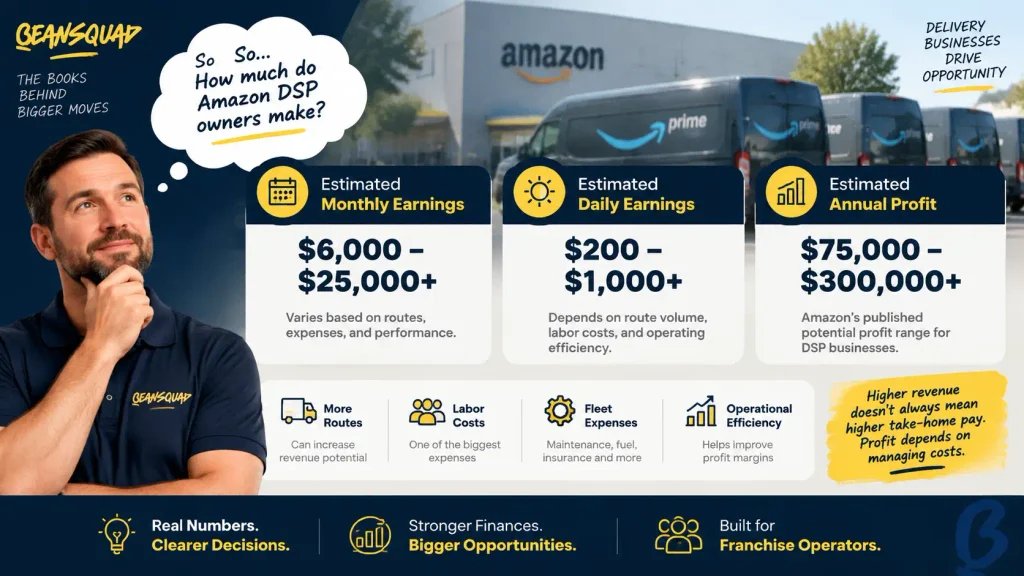
Amazon DSP owners can make $75,000 to $300,000+ in potential annual profit, but this is not a fixed salary. DSP owners operate independent delivery businesses, so their actual income depends on route volume, operating costs, driver expenses, and how efficiently the business is managed.
Unlike employees who receive a regular paycheck, Amazon DSP owners earn money from business profit. Revenue from Amazon delivery operations first covers expenses such as payroll, vehicles, insurance, maintenance, and other operating costs. The remaining profit determines how much income the owner may take from the company.
The amount a DSP owner makes can vary widely. A business with strong route performance and controlled expenses may produce higher profits, while problems like employee turnover, overtime, vehicle downtime, or poor financial tracking can reduce earnings.
Amazon DSP Owner Salary Explained
Amazon DSP owners do not receive a traditional salary because they are business owners, not Amazon employees. Their income comes from the profit generated after the delivery business pays all operating expenses.
This means there is no guaranteed monthly paycheck or standard owner salary. Two DSP owners operating similar businesses can have different earnings because their costs, route volume, staffing, and management decisions may not be the same.
Amazon describes the DSP program as an opportunity for entrepreneurs to own and operate their own package delivery businesses. DSP owners manage employees, delivery operations, and business performance while working as independent business operators.
The best way to understand DSP owner income is to look at three different numbers:
| Financial Term | What It Means |
| Revenue | Money the DSP business receives from delivery operations |
| Expenses | Costs required to operate the business |
| Owner Income | Money available to the owner after expenses and business needs are considered |
Revenue shows the size of the business, but profit shows what the owner may actually earn.
Average Amazon DSP Owner Earnings
Amazon lists potential annual revenue and profit ranges for DSP businesses, but these figures are not guaranteed earnings. According to Amazon’s DSP program information, potential revenue can range from approximately $1 million to $4.5 million, with potential annual profit ranging from $75,000 to $300,000. These figures represent business performance potential, not a fixed Amazon DSP owner salary. Actual results depend on several factors, including:
- Number of routes operated
- Driver payroll costs
- Fleet expenses
- Delivery performance
- Employee retention
- Business management decisions
A DSP with higher revenue does not automatically create higher owner income. Larger operations often require more drivers, vehicles, maintenance, and administrative support, which can increase expenses along with revenue.
How Amazon DSP Owners Make Money
Amazon DSP owners make money by operating last-mile delivery businesses that complete Amazon package deliveries. The business receives compensation for delivery operations and uses that revenue to cover the costs required to operate the company.
Amazon provides DSP owners with delivery volume, business support, technology, and resources to help manage their operations. However, owners remain responsible for running daily activities, managing employees, maintaining vehicles, and controlling financial performance.
The revenue received by a DSP belongs to the business first. Before an owner determines personal earnings, the company must cover expenses such as driver wages, payroll obligations, vehicle costs, insurance, fuel, repairs, software, and administrative needs. The remaining amount after these expenses is the business profit that contributes to owner income.
How Amazon DSP Owners Are Paid
Amazon DSP compensation depends on the delivery business and its contract structure. Payments may vary based on delivery volume, routes operated, and performance-related factors.
However, the amount Amazon pays for delivery operations is not the same as the money an owner takes home. A DSP must use that revenue to run the business and cover operational requirements before calculating profit.
For example, a DSP receiving strong weekly revenue from multiple routes still needs to account for labor hours, overtime, vehicle expenses, maintenance, insurance, and other operating costs. Looking only at Amazon payments can create an inaccurate picture of actual owner earnings.
How Much Does an Amazon DSP Owner Make Per Route?
Amazon DSP owners do not have a simple fixed income amount per route. Route payments contribute to business revenue, but the final profit depends on the cost of operating each route.
A route with high delivery volume may create more revenue, but it may also require additional drivers, more vehicle usage, or extra labor hours. Owners need to measure route profitability after expenses instead of only looking at the number of routes completed.
A useful way to evaluate route performance is:
Route Revenue − Route Expenses = Route Profit
Tracking this difference helps owners understand which routes contribute the most value to the business.
How Much Does an Amazon DSP Owner Make Per Day?
There is no fixed daily income for an Amazon DSP owner because earnings are based on business profit rather than a daily paycheck.
Daily earnings depend on factors such as:
- Number of routes operating that day
- Driver labor costs
- Vehicle expenses
- Delivery performance
- Unexpected operating issues
A DSP may generate significant daily revenue, but the owner’s actual income depends on what remains after the business covers its expenses. For this reason, successful DSP owners focus on daily operations, cost control, and financial tracking rather than only measuring daily revenue.
How Much Does an Amazon DSP Owner Make Per Month?
Monthly Amazon DSP owner income changes based on business performance. Some months may produce stronger profits due to higher delivery volume, while other months may have lower margins because of increased labor costs, vehicle repairs, or operational challenges.
A monthly profit review should include:
- Total revenue received
- Driver payroll
- Fleet expenses
- Insurance costs
- Other operating expenses
- Remaining business profit
Reviewing these numbers gives owners a clearer understanding of their actual income than looking at deposits or revenue alone.
Costs That Affect Amazon DSP Owner Profit
Amazon DSP owners manage a delivery business, which means several operating costs directly affect how much profit remains. Strong revenue does not always lead to strong owner income if expenses are not controlled.
The biggest costs usually come from labor, vehicles, insurance, maintenance, and daily business operations. Understanding these expenses helps owners identify where profit is increasing or where money may be lost.
Driver Payroll and Labor Costs
Driver payroll is one of the largest expenses for many Amazon DSP businesses. Labor costs include driver wages, overtime, payroll taxes, training, and other employee-related expenses. High turnover can increase costs because businesses need to spend more time and money recruiting and training new drivers. Poor scheduling can also create unnecessary overtime, reducing overall profit margins.
Successful DSP owners regularly review labor costs compared with route volume. The goal is not simply reducing payroll, but making sure labor spending supports efficient delivery operations.
Fleet and Vehicle Expenses
Vehicles are another major expense category for Amazon DSP owners. Depending on the business setup, costs may include vehicle leases, maintenance, repairs, fuel, insurance, and unexpected downtime. A vehicle that is unavailable because of repairs can affect route coverage and create additional staffing challenges. Regular maintenance and fleet tracking help owners avoid larger costs in the future.
Owners should monitor fleet expenses closely because small increases in maintenance, fuel, or repairs can reduce overall profitability over time.
Insurance and Business Operating Expenses
Running an Amazon DSP requires more than drivers and vehicles. Owners also need to manage other business expenses, including:
- Commercial insurance
- Software systems
- Accounting services
- Communication tools
- Office expenses
- Training costs
These expenses may appear smaller compared with payroll or vehicles, but recurring costs can add up and affect monthly profit.
Keeping accurate financial records helps owners understand which expenses are necessary and where improvements may be possible.

What Determines Amazon DSP Profitability?
Owning an Amazon DSP can be profitable, but success depends on how well the business manages revenue and expenses together. A DSP with strong delivery volume may still struggle if operating costs grow faster than revenue. On the other hand, a business with efficient operations can improve margins by controlling expenses and making better financial decisions. Important factors that influence Amazon DSP profitability include:
Route Volume
More routes can increase revenue, but additional routes also require more drivers, vehicles, and management resources.
Driver Productivity
Driver performance, scheduling, and overtime management can directly affect labor costs.
Employee Retention
A stable workforce can reduce repeated hiring and training expenses.
Fleet Management
Tracking vehicle use, repairs, fuel, and downtime helps protect profit margins.
Financial Tracking
Accurate financial reporting helps owners identify problems before they become larger issues.
Amazon DSP Profit Margin Explained
Amazon DSP profit margin shows how much money remains after business expenses are removed from revenue.
A simple example:
Revenue – Operating Expenses = Business Profit
The remaining profit percentage shows the business margin. However, profit margins can change from month to month. Factors such as seasonal delivery volume, employee costs, vehicle repairs, and operational changes can impact profitability. Owners should review profit trends over time instead of judging the business based on one strong or weak month.
How to Calculate Amazon DSP Profit
Understanding profit starts with separating business revenue from expenses.
Step 1: Calculate Total Revenue
Start by reviewing all money earned from delivery operations. Owners should compare accounting records with settlement information to make sure the numbers match. Settlement reconciliation is important because payment differences or missing information can affect financial reporting.
Step 2: Add Operating Expenses
Include all costs required to operate the DSP business:
- Driver payroll
- Payroll taxes
- Vehicle costs
- Insurance
- Maintenance
- Software
- Training
- Administrative expenses
Step 3: Determine Business Profit
Subtract total expenses from revenue.
Revenue – Expenses = Profit
This number shows how much the business generated before considering owner decisions about withdrawals, taxes, and future business needs.
Step 4: Calculate Owner Income
Business profit and owner income are not always the same.
Owners may keep part of the profit inside the company for:
- Future growth
- Taxes
- Emergency expenses
- Payroll needs
- Vehicle repairs
This is why DSP owner income should be measured after reviewing the complete financial picture.

Financial Tracking Helps Amazon DSP Owners Protect Profit
Running a successful DSP requires accurate financial information. Business owners need clear records to understand whether revenue growth is actually improving profitability.
The U.S. Small Business Administration recommends tracking financial statements, cash flow, and business expenses because these reports help owners make informed decisions.
Source:
https://www.sba.gov/business-guide/manage-your-business/manage-your-finances
For Amazon DSP owners, strong financial tracking can help identify:
- Increasing labor costs
- Unexpected expenses
- Payment differences
- Changes in profit margins
- Opportunities to improve efficiency
Accurate records make it easier to understand where money is being earned and where profit may be declining.
Key Financial KPIs Every Amazon DSP Owner Should Track
Tracking the right numbers helps owners understand the health of their delivery business.
| KPI | Why It Matters |
| Total Revenue | Shows overall business income |
| Revenue Per Route | Helps compare route performance |
| Payroll Percentage | Shows labor impact on profit |
| Overtime Costs | Identifies staffing issues |
| Fleet Expenses | Tracks vehicle-related spending |
| Operating Margin | Measures remaining profit |
| Cash Flow | Shows ability to cover expenses |
| Settlement Accuracy | Helps identify payment issues |
Reviewing these numbers monthly gives owners a clearer view of business performance.
How Amazon DSP Owners Can Increase Profit Margins
Improving profit does not always mean cutting costs. DSP owners need to understand which operational changes improve efficiency while maintaining delivery performance. Profit margins can improve by managing labor costs, reducing unnecessary overtime, optimizing driver scheduling, and maintaining appropriate staffing levels. Keeping experienced drivers can also reduce repeated hiring and training expenses, helping create a more stable operation.
Fleet management is another important area for improving profitability. Regular vehicle maintenance and tracking fleet performance can help reduce unexpected repairs, downtime, and unnecessary expenses. Owners should also review settlement information by comparing expected payments with actual settlements to identify possible discrepancies. Monitoring monthly financial trends allows owners to identify challenges early, make informed decisions, and build a delivery business where revenue growth leads to sustainable profit.
Conclusion
Amazon DSP owners do not earn a traditional salary. Their income comes from the profit generated by an independently operated delivery business. While Amazon lists potential DSP profit ranges of $75,000 to $300,000 annually, actual owner earnings depend on route volume, expenses, operational efficiency, and financial management.
A successful DSP is not built only on completing more routes. Owners need to understand payroll costs, fleet expenses, settlement information, and profit margins to know what the business is truly earning.
Keeping accurate financial records and reviewing key performance numbers helps owners make better decisions. When revenue, expenses, and operations are tracked together, DSP owners can identify opportunities to protect profit and improve long-term business performance.
Want Better Visibility Into Your Amazon DSP Finances?
Understanding revenue is only part of running a successful DSP. Accurate financial tracking helps operators identify payment issues, monitor profitability, and understand where money is being spent.
BeanSquad helps Amazon DSP operators review financial data, analyze settlement activity, and improve visibility into their business performance.
Schedule Your Free Reconciliation Assessment
Frequently Asked Questions
How much do Amazon DSP owners make?
Amazon DSP owners can make approximately $75,000 to $300,000+ in potential annual business profit, but actual income varies based on expenses, routes, and business efficiency.
Do Amazon DSP owners get a salary?
No. Amazon DSP owners do not receive a fixed salary. They earn income from the profit remaining after the business pays operating expenses.
How much does Amazon pay DSP owners per route?
Amazon DSP route payments vary based on delivery operations and contract factors. Route revenue contributes to business income, but owner profit depends on expenses such as payroll, vehicles, and maintenance.
How much can an Amazon DSP owner make per month?
Monthly earnings depend on business performance. Revenue, route volume, operating costs, and financial management determine how much profit remains for the owner.
Is owning an Amazon DSP profitable?
An Amazon DSP can be profitable, but results vary between businesses. Route volume, labor costs, fleet management, employee retention, and financial tracking all influence profitability.
What affects Amazon DSP owner income?
Owner income is affected by delivery volume, payroll expenses, vehicle costs, operational efficiency, performance results, and how well the business manages expenses.
How do Amazon DSP owners increase profit?
DSP owners can improve profit margins by managing labor costs, reducing unnecessary expenses, improving fleet efficiency, tracking financial performance, and reviewing settlement information regularly.
How much revenue can an Amazon DSP generate?
Amazon lists potential DSP business revenue between $1 million and $4.5 million annually. This represents business revenue potential, not guaranteed owner income, because expenses must still be paid before profit is calculated.