
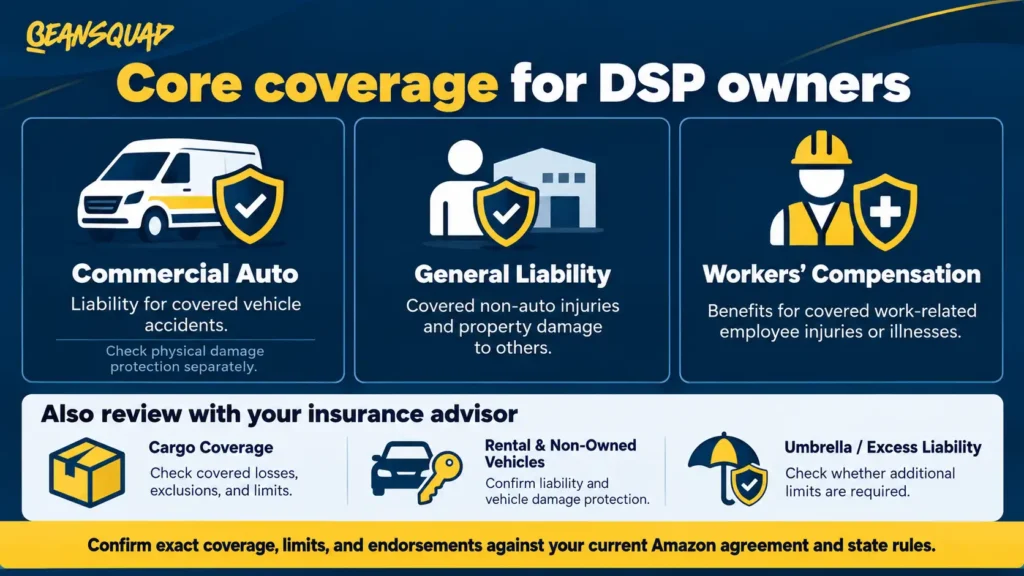
Amazon DSP owners typically need commercial auto, general liability, and workers’ compensation insurance, with cargo and hired or non-owned vehicle coverage also needing review. The exact coverage limits, endorsements, and additional protections depend on your current Amazon agreement, state requirements, and fleet operations. Owners are responsible for arranging and maintaining suitable coverage, even when purchasing through an Amazon-associated insurance program.
Insurance costs vary with fleet size, payroll, claims history, location, and policy terms. Before choosing a quote, check the deductibles, exclusions, and coverage for rented or replacement vans. Auto liability alone does not cover repairs to your own vehicles, and cargo protection does not automatically cover every lost package.
Keep policies current as vehicles, drivers, and operations change, and track premiums, refunds, and adjustments in your books. Alongside accurate insurance records, BeanSquad’s Amazon DSP financial services help owners strengthen settlement accuracy and understand their broader financial picture.
What Insurance Does an Amazon DSP Need?
DSP insurance involves several coverages working together. Use this overview to organize your review. It is not a universal checklist of separately required policies.
Marsh’s Amazon DSP insurance program overview identifies commercial auto, general liability, and workers’ compensation as required coverage categories.
| Coverage to review | Main purpose | Question to ask |
| Commercial auto liability | Injuries or property damage caused to others through covered vehicle use | Does the policy cover our delivery operations and vehicles? |
| Collision and comprehensive | Covered damage to your vehicles | Which losses and deductibles apply? |
| General liability | Certain non-auto claims involving third parties | Which delivery-related activities fall within coverage? |
| Workers’ compensation | Covered employee injuries or illnesses arising from work | Are our employees and operating states correctly covered? |
| Cargo legal liability | Covered liability for goods in transit | Which causes of loss, limits, and exclusions apply? |
| Hired and non-owned auto liability | Certain business use of vehicles the company does not own | How are rentals and temporary replacements handled? |
| Umbrella or excess liability | Additional limits above specified underlying liability coverage | Does our agreement require it, and which policies sit beneath it? |
Commercial Auto Insurance for Delivery Vehicles
Commercial auto liability addresses covered injury or property damage claims involving other people. Collision and comprehensive coverage address different risks, including covered damage to your own vehicles. Having liability insurance alone does not establish that your van repairs are covered.
Ask your broker to show you where the policy addresses your delivery activity, vehicle types, authorized use, and physical damage deductibles. A useful review ends with clear answers for your actual fleet.
General Liability for Non-Auto Business Risks
General liability can help with covered third-party bodily injury, property damage, and associated legal claims. It generally does not replace commercial auto insurance or workers’ compensation. Those distinctions matter when a delivery business faces different risks on the road and at customer locations.
Ask how your policies handle delivery activities outside the vehicle, including loading and unloading. Have your advisor explain any overlap or exclusions.
Workers’ Compensation and Employers’ Liability
Workers’ compensation can help pay medical expenses and replace part of an employee’s lost wages after a covered work-related injury or illness. State rules affect coverage and benefits, so review the requirements wherever your employees work.
Give your advisor accurate job descriptions, payroll information, and operating locations. Also ask whether employers’ liability protection is included or requires a separate arrangement for your situation.
Keep employee health benefits on a separate review list. Do not assume a health plan satisfies workers’ compensation requirements.
Cargo Coverage for Packages in Transit
Review cargo protection separately from vehicle protection. Marsh’s program highlights cargo legal liability with specified covered causes of loss. That does not establish coverage for every missing or damaged package.
Ask your broker to explain how theft, unattended vehicles, loading, unloading, and unexplained shortages are treated. Confirm the deductible and applicable limit before relying on the coverage.
Hired and Non-Owned Auto Coverage
A replacement van deserves its own coverage check. Hired and non-owned auto liability can address certain business use of rented or other non-owned vehicles, but liability protection does not automatically pay for damage to those vehicles.
Before using a rental, ask which policy applies, whether physical damage protection is included, and what information your insurer needs.
Umbrella or Excess Liability
Umbrella and excess policies can provide additional liability limits above specified underlying coverage. Their scope depends on the policy, and the two terms should not be treated as interchangeable in every situation.
Confirm whether your DSP agreement requires additional limits. If you purchase this protection, ask which underlying policies it covers and which exclusions still apply.
What Coverage Limits and Documents Does Amazon Require?
Start with your current Amazon DSP agreement and insurance instructions. A general online guide cannot confirm that a particular quote satisfies your business’s contract.
Marsh confirms that DSPs must carry specified coverages and limits, but its public program overview is not a complete contract-specific requirements schedule.
Ask your broker to compare your documents with Amazon’s requirements in writing. Your review should cover:
- The correct legal business name and insured entities.
- Required coverage types and limits.
- Policy effective and expiration dates.
- Any required additional-insured wording or other endorsements.
- Covered vehicles, operations, and locations.
- Deductibles and exclusions that affect your business.
Keep policy documents, endorsements, certificates of insurance, and vehicle insurance cards together. Ask your advisor which documents Amazon, a leasing company, or a rental provider needs.
For operators joining Marsh’s program, its onboarding guidance describes issuing a binder, auto ID cards, and requested certificates, then forwarding proof of coverage to Amazon compliance. Confirm the process with your own provider.
Does Amazon Provide Insurance for DSP Owners?
Amazon offers access to an insurance program managed by Marsh. Access to that program is different from automatically having coverage. Owners still need to arrange and maintain the protection required for their DSP business.
Do not use the Amazon branding on a van as your coverage check. Ask for the actual policy information and confirmation of what applies to your operation.
This guide concerns DSP businesses operating delivery fleets. If you are researching an individual driving arrangement, confirm that the insurance guidance applies to that program before using it.
How Much Does Amazon DSP Insurance Cost?
There is no single premium that represents every DSP. Fleet size, payroll, claims history, delivery territory, vehicle values, and other underwriting factors can affect pricing. Request quotes using the same business information and coverage requirements. Otherwise, a lower price may simply reflect a different policy.
Compare More Than the Monthly Payment
Build a side-by-side comparison of:
- Annual premium and payment schedule.
- Down payment and any financing charges.
- Coverage limits and deductibles.
- Exclusions and required endorsements.
- How vehicle additions or removals affect billing.
- How payroll adjustments or audits affect the final premium.
Ask the broker to explain any differences before you choose. Keep the written comparison with your renewal records.
Prepare for Changes During the Policy Term
A payment schedule does not necessarily mean every bill will remain unchanged. Under Marsh’s DSP program, fleet information influences vehicle billing, and pay-as-you-go workers’ compensation billing uses actual payroll information. Those are program-specific arrangements.
Ask your provider how its own adjustments work. Set aside time to compare each bill with the supporting fleet or payroll records.
Common Amazon DSP Insurance Gaps and Mistakes
Assuming One Policy Handles Every Risk
Review each exposure separately: injury to another person, damage to your van, an employee injury, and a cargo loss. Ask your advisor to identify the relevant coverage and exclusions for each.
Adding Vehicles Without Confirming Coverage
When a vehicle enters or leaves the fleet, document the change and follow your provider’s reporting process. Obtain confirmation rather than assuming someone else completed it.
Marsh specifically instructs DSPs using rental vehicles at launch to report them through Amazon’s Fleet Portal so it can arrange the coverage change. Other providers may use different procedures.
Letting Payroll Information Become Outdated
Reconcile the payroll information provided to your insurer with your payroll records. Ask how corrections, job classifications, and new operating states should be reported. Keep those records organized for any premium review or audit.
Choosing a Deductible Without Planning for It
Before accepting a deductible, ask what your business would need to pay after a covered loss. Include that potential cash requirement in your planning alongside premiums and routine vehicle expenses.
Leaving Renewal to the Last Minute
Set internal reminders for renewal discussions, document requests, and confirmation of the next policy’s effective date. Assign one person responsibility for completing the review and keeping the evidence.
A Practical Insurance Review Checklist
Use this checklist before launch, at renewal, and when your operations change:
- Obtain the latest insurance requirements applicable to your DSP.
- Give your broker accurate fleet, payroll, and operating information.
- Request a written comparison between the requirements and proposed policies.
- Resolve questions about rentals, cargo, deductibles, and exclusions.
- Confirm the effective date and required proof of coverage.
- Record premium payments and adjustment procedures.
- Assign responsibility for policy changes and renewal follow-up.
Keep unresolved questions visible until your advisor answers them. A checklist is most useful when each item has a document or confirmation behind it.
Track Insurance Costs in Your DSP’s Financial Records
Insurance deserves a clearly identifiable place in your books. Keep premium invoices, payment confirmations, policy periods, refunds, adjustments, and audit documents together.
For accrual-based reporting, premiums paid in advance may need to be recorded as prepaid insurance and expensed over the coverage period. Confirm the treatment with your accountant. BeanSquad’s guide to Amazon DSP financial records for tax season explains why insurance schedules belong with your year-end records.
During your monthly review, ask:
- Does the amount paid agree with the insurer’s statement?
- What explains any change from the previous period?
- Have refunds and additional premiums been recorded?
- Does the expense reflect the appropriate coverage period?
Review insurance alongside the other operating costs that affect Amazon DSP profit.
Accurate expense records also need reliable revenue records. Consistent Amazon DSP settlement reconciliation helps you compare delivery-related earnings, settlement information, and payments while keeping that process separate from insurance administration.
Frequently Asked Questions
Is Amazon DSP Insurance One Policy?
It generally involves a combination of coverages. Review the complete package and its policy documents with your advisor rather than relying on the package name alone.
Does Commercial Auto Liability Cover Repairs to My Van?
Liability coverage addresses covered claims involving others. Ask whether collision, comprehensive, or another applicable physical damage arrangement covers your own van.
How Do I Confirm Coverage for a Rental Van?
Contact your insurance advisor before using it. Confirm the reporting process, effective date, liability protection, physical damage arrangements, and documents the rental company requires.
Is Umbrella Insurance Required for Every DSP?
Check your current agreement. Do not assume that an optional recommendation for another operator is a requirement for yours, or that your underlying limits are sufficient without review.
What Should I Review Before Renewal?
Review the current contract requirements, fleet and payroll details, limits, exclusions, deductibles, premium adjustments, and proof of coverage. Resolve changes before the new policy period begins.
Conclusion
Amazon DSP insurance typically includes commercial auto, general liability, and workers’ compensation, with cargo, rental vehicle protection, and additional liability limits needing review against your agreement. Your current Amazon requirements, state rules, and policy terms determine the coverage your business needs.
Before buying or renewing, confirm the limits, exclusions, deductibles, and covered vehicles. Keep fleet and payroll details current, and track insurance payments and adjustments in your books. This gives you a clearer view of both your protection and your operating costs.
Get a Clearer View of Your DSP Finances
Insurance is one part of your operating costs. Accurate settlement records help complete the financial picture. BeanSquad’s Route Recon AI™ helps identify payment discrepancies and prepare dispute packages.
Book Now to schedule your complimentary reconciliation assessment.