
The Amazon Delivery Service Partner program, also called the DSP program, lets business owners run independent delivery companies that carry Amazon packages. Amazon launched the program in 2018. Each DSP hires its own drivers, manages delivery vehicles, and handles daily operations while Amazon provides delivery volume, technology, and business support.
A DSP owner is not an Amazon employee. You run your own company and take responsibility for payroll, insurance, vehicle expenses, and financial management. While Amazon provides delivery opportunities, your business must control costs and meet performance expectations.
This guide explains how the program works, how DSP owners get paid, startup requirements, potential earnings, financial risks, and what to consider before applying.
How Does the Amazon DSP Program Work?
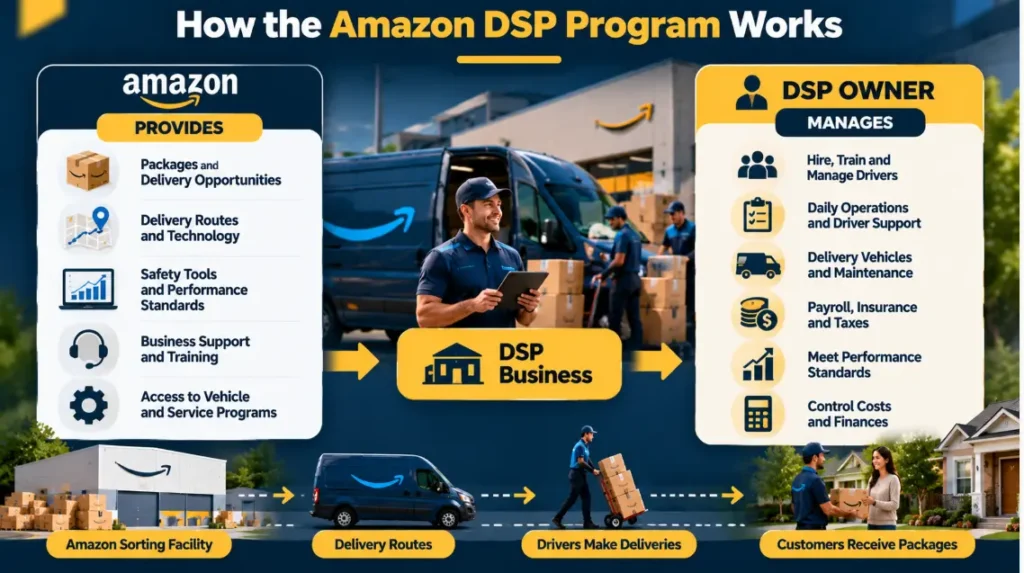
Amazon works with independent delivery companies to transport packages from its delivery stations to customers. Amazon provides delivery routes and technology, while each DSP owner hires, trains, and manages the drivers who complete the deliveries. These drivers, called delivery associates, work for the DSP rather than Amazon. Amazon’s delivery driver hiring page describes DSPs as independent third-party businesses.
A typical day for an owner may include reviewing delivery schedules, checking vehicles, coaching drivers, and monitoring performance. Owners also manage payroll, insurance, bookkeeping, and other business responsibilities.
What Does Amazon Provide, and What Does the Owner Manage?
Amazon provides delivery opportunities, route planning, technology, and access to business support. The DSP owner is responsible for managing employees, vehicles, and the financial side of the company.
Here is how the responsibilities generally divide.
| What Amazon Provides | What the DSP Owner Manages |
| Packages and delivery opportunities | Hiring, training, and scheduling drivers |
| Delivery routes and technology | Daily delivery operations and driver support |
| Safety tools and performance standards | Vehicle maintenance and safety practices |
| Performance monitoring and business support | Meeting standards and controlling costs |
| Access to selected vehicle and service programs | Insurance, payroll, taxes, and bookkeeping |
Amazon also offers training, business coaching, and access to services from third-party providers. The specific support available may vary by program and location.
How Is the DSP Program Different From Amazon Flex?
The main difference is that a DSP owner operates a delivery company, while an Amazon Flex driver works independently and usually uses their own vehicle.
| Program | Who It Is For | How It Works |
| Amazon DSP | Business owners | Hire drivers, manage delivery vehicles, and operate a delivery business |
| Amazon Flex | Individual drivers | Deliver packages using their own vehicles through Amazon Flex |
Amazon also has other transportation programs, including Amazon Freight Partner, which focuses on trucking operations rather than local last-mile delivery. The DSP program is designed for people who want to run a business with employees and ongoing operational responsibilities, not simply deliver packages themselves.
How Do Amazon DSP Owners Get Paid?
Amazon pays DSP businesses for delivery services under their agreements. Payment arrangements can include fixed and volume-related components, while performance-based incentives may also apply depending on the contract.
The money Amazon pays is business revenue, not the owner’s personal income. The company must first cover expenses such as driver wages, vehicle costs, insurance, payroll taxes, and other operating costs. The payment structure and terms can vary, so owners should review their agreements and regularly compare payment records with completed delivery work.
How Does the Scorecard Affect DSP Payments?
Amazon uses performance scorecards to evaluate areas such as delivery quality and safety. Performance ratings can affect incentive payments when those incentives are part of a DSP’s agreement.
For example, an owner may expect an incentive based on a particular performance rating, but the payment records may show a different result. In that situation, the owner should check the applicable scorecard period and payment terms before deciding whether there is an error. Our guide to common Amazon DSP settlement mistakes explains the issues owners should look for during payment reviews.
How Much Does It Cost to Start an Amazon DSP?
Starting an Amazon DSP requires money for business setup and enough working capital to manage expenses during the launch period. Actual costs depend on the location, vehicle arrangements, staffing needs, and other business requirements. Amazon has previously advertised startup costs as low as $10,000 under certain program assumptions. However, that figure should not be treated as a complete operating budget.
According to Amazon’s June 2026 DSP guidance, applicants must provide proof of at least $30,000 in liquid assets. Liquid assets are cash or other assets that can be accessed quickly. The liquid asset requirement is different from the amount you will spend starting the business. It shows financial readiness rather than representing your total startup costs.
Before applying, prepare a budget that covers both startup costs and ongoing expenses. Do not assume that meeting the liquid asset requirement means you have enough money for every operating situation.
How Much Can an Amazon DSP Owner Make?
Amazon publishes estimated revenue and profit ranges for DSP businesses, but the amounts are not guaranteed. Actual earnings depend on factors such as delivery volume, operating costs, business performance, and location.
In its June 15, 2026 program guide, Amazon lists the following potential annual figures:
| Financial Measure | Amazon’s Published Estimate |
| Annual business revenue | $1 million to $4.5 million |
| Annual business profit | $75,000 to $300,000 |
These figures describe potential business results, not a guaranteed outcome for every DSP. They should not be treated as the expected income of a new owner. Revenue is the money the business receives before expenses. Profit is what remains after business costs are deducted.
The owner’s personal take-home amount can differ from business profit because of taxes, reinvestment, loan payments, cash reserves, and other financial needs. For example, a DSP may generate strong revenue but keep less profit than expected if payroll, vehicle repairs, or insurance expenses increase.
Before estimating what you could earn, review Amazon’s current financial notes and build a budget based on realistic operating costs. For a more detailed breakdown, read our guide to how much Amazon DSP owners make.
What Has Changed in the Amazon DSP Program Recently?
In September 2026, Amazon announced an additional $1.9 billion investment in the DSP program for 2027. The company also reported that its total investment in the program and its delivery associates had reached $21.7 billion over eight years.
The announcement also covered new safety technology and AI-powered delivery tools designed to support drivers and business operations. For DSP owners, the important financial question is how changes in payment rates, employee wages, and operating costs affect profitability.
Higher driver pay can increase payroll expenses, while changes in payments from Amazon may help businesses cover those costs. Owners still need to review their own numbers to understand the financial impact. Our guide to Amazon DSP financial KPIs explains which performance and financial measures are worth tracking.
What Are the Benefits and Risks of Owning an Amazon DSP?
The main advantage of the DSP program is access to Amazon’s delivery network and business support. The main risk is running a business that depends heavily on one customer while remaining responsible for employees, vehicles, and operating costs.
Benefits of the Amazon DSP Program
Amazon supplies delivery volume, so DSP owners do not need to build a customer base from scratch in the same way many other businesses do. The program also provides access to delivery technology, training, business coaching, and selected services that can help owners manage their operations. Amazon has also developed pathways for experienced delivery employees to move toward business ownership. These resources can make it easier to enter the delivery industry, but owners must still manage their businesses and meet Amazon’s standards.
Risks of Owning an Amazon DSP
One of the biggest risks is depending on Amazon for most of your business revenue. If delivery volume changes, operating requirements increase, or the agreement ends, the business may face financial difficulties. Owners should review the contract carefully to understand renewal terms, obligations, and other important conditions.
Other common challenges include hiring and keeping drivers, vehicle maintenance, insurance costs, and meeting performance expectations. Profit can also decrease when expenses rise faster than revenue. For example, an increase in wages or vehicle costs can affect earnings even when the number of completed routes remains steady.
How Do You Become an Amazon DSP Owner?
To become an Amazon DSP owner, you apply through Amazon’s official program website. Amazon reviews your application, finances, background, and leadership experience before deciding whether to move forward. According to Amazon’s application guidance, the process generally includes the following stages:
- Complete the online application. Provide information about your work experience, finances, and interest in operating a DSP business.
- Pass the application and financial review. Amazon reviews your financial information and conducts checks that can include background, credit, and motor vehicle records.
- Complete the interview process. Applicants who advance may need to attend interviews, visit a delivery station, and submit a business plan.
- Receive an offer if selected. Amazon determines whether to offer you a place in the program based on its review and available opportunities.
- Complete onboarding and launch preparation. Selected applicants enter the Future DSP program for training and preparation before beginning operations.
The process can take several months, and meeting the basic requirements does not guarantee selection. Available opportunities also depend on Amazon’s needs in your preferred operating area. Our guide to Amazon DSP owner requirements covers the financial requirements, screening process, and skills in more detail.
What Financial Work Do New DSP Owners Often Underestimate?
Running an Amazon DSP involves more than managing delivery routes and drivers. Owners also need to handle regular financial tasks that affect cash flow, operating costs, and business profitability. These responsibilities include choosing the right business structure, tracking payments, managing insurance and payroll, and maintaining reliable accounting records.
Is the Amazon DSP Program Right for You?
The Amazon DSP program may suit someone who enjoys leading teams, solving daily operational problems, and managing business finances. It is a hands-on business opportunity rather than a passive investment.
Before applying, consider these questions:
- Do you have experience managing or coaching employees?
- Can you meet the financial requirements and handle unexpected expenses?
- Are you comfortable operating under Amazon’s delivery and performance standards?
- Can you manage hiring, scheduling, and driver retention?
- Do you have a plan for bookkeeping, payroll, and cash flow?
- Are you comfortable with the financial risks of relying on one major customer?
If you can answer these questions confidently, the DSP program may be worth exploring further. If several areas concern you, work on those gaps before applying. Understanding your responsibilities early can help you make a better decision about business ownership.
Frequently Asked Questions
Is the Amazon DSP Program a Franchise?
Amazon describes the DSP program as an opportunity to operate an independent delivery business, not as a traditional franchise offering. DSP owners work with Amazon under business agreements and follow its operating standards. Whether a particular arrangement meets a legal definition of a franchise depends on the applicable law and agreement.
Do Amazon DSP Drivers Work for Amazon?
No. DSP delivery associates are employed by independent delivery service partner businesses rather than Amazon directly. The DSP owner is responsible for hiring and managing their employees.
How Do I Sign Up for the Amazon Delivery Service Partner Program?
Visit Amazon’s official DSP website and complete the application. You will need to provide business and financial information, and Amazon will review whether you meet its selection requirements.
How Long Does the Amazon DSP Application Process Take?
Amazon states that application reviews can take several months. The time depends on screening, interviews, financial reviews, and available delivery opportunities. There is no guaranteed approval timeline.
Is the DSP Program Available Outside the United States?
Yes. Amazon operates the DSP program in multiple countries, but opportunities and eligibility requirements vary by market. Check Amazon’s official DSP website for availability in your country.
Conclusion
The Amazon Delivery Service Partner program gives business owners access to Amazon’s delivery network, technology, and operational support. In return, owners manage employees, vehicles, finances, and performance while operating an independent business. Amazon’s published financial figures show potential earnings, but actual results depend on operating costs, business size, and management decisions.
Before applying, review Amazon’s current requirements, understand the financial commitment, and prepare a realistic plan for staffing, operating expenses, and cash flow. If you already run a DSP, review your settlements and financial records regularly to catch payment differences, control costs, and understand your business’s performance.
Need Help Managing Your Amazon DSP Finances?
Running a delivery business requires accurate records and regular reviews of Amazon payments, deductions, and operating costs.
BeanSquad helps Amazon DSP owners review settlement reports, investigate payment differences, and organize financial records. Our reconciliation services are designed to give owners clearer information about payments and business performance.