
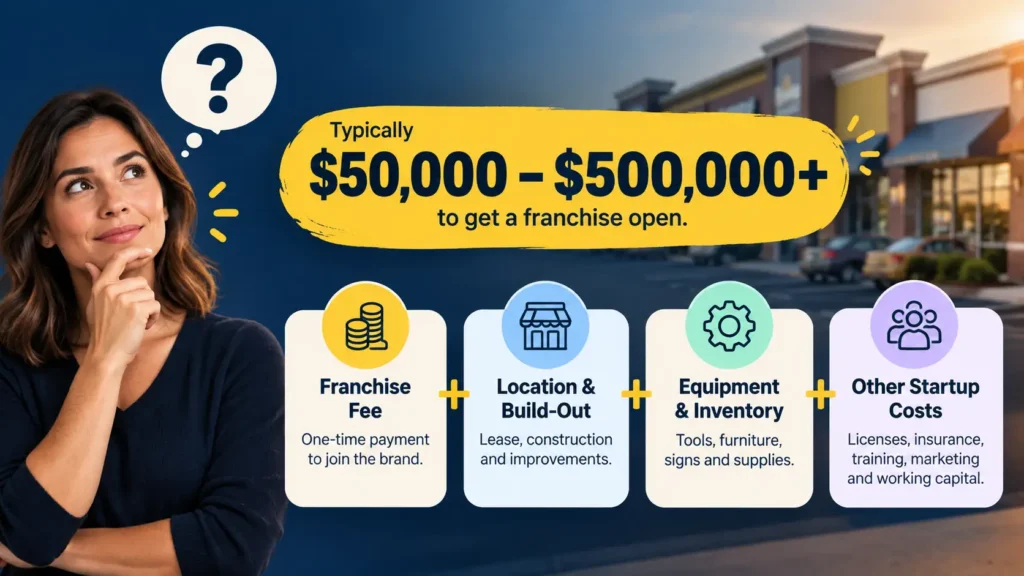
For many franchise opportunities in the U.S., becoming a franchise owner can require $50,000 to $500,000 or more in total initial investment. Some home-based or mobile franchises can cost less than $50,000, while restaurants, hotels, and businesses that need large physical locations can require $1 million or more. But there is no single price for becoming a franchise owner.
The amount you need depends on the franchise, industry, location, equipment, real estate, staffing needs, and how much working capital you need before the business can support itself. One of the biggest mistakes a first-time buyer can make is looking only at the franchise fee. That fee is only one part of the cost. Before deciding whether a franchise fits your budget, you need to understand where that money actually goes.
How to Estimate Your Real Cost Before Buying a Franchise
You cannot predict every expense before buying a franchise, but you can build a much more realistic budget before signing.
Talk to Existing Franchisees
Ask current franchisees what they actually spent, which costs were higher than expected, how long their location took to open, and how much working capital they needed. The FTC recommends comparing real franchisee costs with the franchisor’s estimates.
Get Local Cost Estimates
Check actual prices for rent, construction, insurance, equipment, permits, legal help, accounting, and payroll. These costs can change significantly from one location to another.
Leave Room for Unexpected Costs
Do not build your budget around the lowest investment estimate. Keep extra funds available for delays, higher prices, and unexpected expenses so you are not using every dollar just to get the business open.
Franchise Fee vs. Total Initial Investment
A franchise may advertise an entry fee of $20,000, $30,000, or $50,000. That does not mean you can open the business for that amount. The franchise fee and the total initial investment are two different numbers.
What the Initial Franchise Fee Covers
The initial franchise fee is usually a one-time payment made to the franchisor when you join the franchise system. It may give you access to things such as:
- The right to use the franchise brand
- The company’s business system
- Initial training
- Operating procedures
- Brand standards
- Opening support
- Access to approved products, technology, or systems
What is included varies from one franchise to another. The Federal Trade Commission notes that an initial franchise fee can range from tens of thousands of dollars to much more depending on the franchise. It may also be non-refundable.
Why the Franchise Fee Is Not the Full Cost of Becoming a Franchise Owner
Paying for the right to use a brand does not automatically give you a ready-to-open business. You may still need money for a location, construction, equipment, inventory, insurance, licenses, training travel, marketing, employees, and cash to keep the business running during its early months. For example, a franchise may have a $30,000 franchise fee but require several hundred thousand dollars to actually open.
This is why comparing franchises only by their franchise fees can give you the wrong picture. Look at the total investment, not just the entry fee.

What Makes Up the Total Initial Franchise Investment?
The total initial investment is the estimated amount needed to get the franchise ready for business and support it during the startup period. The exact amount depends on the franchise model, location, brand requirements, equipment, and how much working capital you need.
Real Estate, Lease Deposits, and Build-Out
A franchise that needs a physical location may require a large real estate and construction budget. This can include a lease deposit, rent before opening, remodeling, plumbing, electrical work, flooring, lighting, signage, and other improvements needed to meet the franchise’s standards. A home-based franchise may avoid most of these expenses. A restaurant or retail location usually cannot. This is one reason two owners buying into the same franchise may still have different startup costs.
Equipment, Furniture, Signage, and Technology
Most franchises need equipment before they can operate. What you need depends on the type of business. A restaurant may require commercial kitchen equipment and refrigeration. A service franchise may need vehicles and tools. A retail business may need point-of-sale systems, displays, furniture, security systems, and branded signs.
Some franchisors require specific equipment or approved suppliers, so you may not always be able to choose the cheapest option. Check these requirements before building your budget.
Opening Inventory and Supplies
If the franchise sells or uses physical products, you may need to buy inventory before opening. A restaurant may need food, packaging, cleaning supplies, and kitchen items. A retail store may need enough products to fill the shelves. A service franchise may need uniforms, tools, or job materials. The important question is not simply how much inventory costs in general. It is how much your specific franchise expects you to have ready on opening day.
Licenses, Permits, Insurance, and Professional Fees
You may also need to pay for business licenses, permits, insurance, legal review, accounting help, zoning approval, health permits, or professional services before opening. These expenses often receive less attention than rent or equipment because they are not as visible.
But they still affect the total amount of money you need. The FTC advises prospective franchisees to investigate these expenses rather than relying only on the headline franchise fee.
Grand Opening Expenses
Many franchise systems expect owners to promote the business before and during opening. Your budget may include local advertising, signs, promotions, events, digital marketing, or a required grand-opening campaign.
Working Capital Before the Business Supports Itself
Opening the doors does not mean the business will immediately bring in enough cash to cover every expense. You may still have rent, payroll, utilities, supplies, insurance, and other bills while sales are building.
That is why working capital matters. The FTC warns that starting the business may take several months and reaching break-even can take much longer. It recommends considering both business expenses and your personal living costs while evaluating a franchise opportunity.
Your goal should not be simply to have enough money to open. You need enough money to stay open while the business gets established.
How Much Does a Franchise Cost by Business Type?
Franchise investment changes dramatically depending on the kind of business you choose. Home-based and mobile concepts may fall near the low end, while physical retail stores, restaurants, childcare businesses, and hotels can require hundreds of thousands or millions of dollars.
Home-Based and Mobile Franchises
Home-based and mobile franchises often have lower startup costs because they may not require a traditional storefront. Some current industry estimates place these concepts around $10,000 to $50,000, although individual franchises can fall outside this range.
Examples may include certain consulting, home-service, inspection, cleaning, or mobile business models. Lower startup cost does not mean there are no expenses. Vehicles, tools, software, marketing, insurance, and employee costs may still apply.
Service-Based Franchises
Service franchises vary more widely. A simple home-service business may need relatively little physical infrastructure. A gym, salon, health business, or other location-based service may require a major build-out and specialized equipment. Instead of assuming all service franchises are inexpensive, compare the exact requirements of each concept.
Retail and Storefront Franchises
Retail franchises usually need more money because you may be paying for a location, fixtures, signs, inventory, equipment, and construction at the same time. Current published ranges for non-food retail franchises can stretch from tens of thousands of dollars to well above $1 million depending on the brand and store format.
This is why an “average franchise cost” can be misleading. A small mobile business and a large retail store are completely different investments.
Restaurant and Food Franchises
Food businesses are often among the more expensive franchise models. Current published examples place quick-service restaurant investments anywhere from roughly $200,000 into the seven figures, while full-service restaurant concepts can require considerably more.
Restaurants may need:
- Commercial kitchens
- Refrigeration
- Dining areas
- Specialized equipment
- Large build-outs
- Food inventory
- Health permits
- More employees
The cost of becoming a franchise owner therefore depends as much on the type of business as it does on the brand name.
Where to Find the Real Cost in the Franchise Disclosure Document
Before you sign a franchise agreement or pay money, spend time with the Franchise Disclosure Document.
Under the FTC Franchise Rule, prospective franchisees generally must receive the FDD at least 14 calendar days before signing a binding agreement or making a payment to the franchisor or its affiliate. Several sections are especially important when you are trying to understand the cost of becoming a franchise owner.
Item 5: Initial Fees
Item 5 covers fees you pay to the franchisor or its affiliates before the business opens. This may include the initial franchise fee and other upfront payments. Look at the amount, when it is due, and whether it can be refunded.
Item 6: Other Required Fees
Item 6 covers other fees that may be required under the franchise relationship. This section becomes especially important when you want to understand what financial obligations continue beyond the opening stage. For this article, the main point is simple: do not stop reading after Item 5.
Item 7: Estimated Initial Investment
For someone asking, “How much does it cost to become a franchise owner?”, Item 7 is one of the most important parts of the FDD. It normally shows estimated startup expenses and presents a range rather than one perfect number.
It can include items such as:
- Franchise fees
- Equipment
- Inventory
- Real estate expenses
- Training costs
- Insurance
- Opening expenses
- Additional funds for the early operating period
Use Item 7 as the starting point for your own budget. Then replace estimates with real local quotes wherever possible.
Franchise Startup Costs Buyers Commonly Underestimate
A budget can look complete on paper and still miss important expenses. Watch especially closely for these areas.
Construction and Opening Delays
A project may take longer than expected because of permits, contractors, equipment delivery, inspections, or landlord issues. A delay can mean paying expenses before the business begins generating revenue.
Professional and Local Regulatory Costs
Legal reviews, accountants, permits, architects, engineers, insurance, and local requirements may not feel like major expenses one by one. Together, they can add thousands of dollars to the project.
Pre-Opening Payroll and Training
Employees may need to be hired and trained before customers arrive. That means payroll can begin before sales do.
Extra Working Capital
The minimum working-capital estimate should not automatically become your target budget. Unexpected repairs, slow sales, marketing needs, price increases, or a delayed opening can consume cash quickly.
Personal Living Expenses Before the Business Produces Income
Your personal bills do not pause because you became a business owner. Plan for the possibility that you may not be able to take a full income from the franchise immediately.
What Costs Continue After Your Franchise Opens?
The investment does not end on opening day. Franchise owners may continue paying expenses such as royalties, marketing contributions, payroll, rent, inventory, utilities, insurance, software, maintenance, taxes, and other operating costs.
Those expenses answer a different question from the one covered in this guide. Once you understand what it takes to become a franchise owner, the next step is understanding what it takes to run the franchise every month. For a full breakdown, read BeanSquad’s guide to the costs associated with operating a franchise.
Ready to Put Your Franchise Numbers Into a Clear Plan?
Understanding the cost of becoming a franchise owner is only the first step. Once you are preparing to open, BeanSquad can help you keep your franchise finances organized with bookkeeping, financial reporting, cash flow management, and other franchise-focused accounting support. Based in Westport, Connecticut, BeanSquad works with franchise operators who need clearer numbers as they launch and grow.
Schedule a free consultation to discuss the financial side of your franchise and build a stronger foundation from day one.
Frequently Asked Questions
How Much Money Do You Need to Become a Franchise Owner?
For many franchises, the total investment can fall somewhere between tens of thousands and several hundred thousand dollars. Some home-based and mobile concepts may cost less than $50,000, while restaurants, hotels, and large storefront businesses can require $1 million or more. The best number for a specific franchise is the estimated initial investment shown in Item 7 of its FDD.
What Is the Difference Between a Franchise Fee and Total Investment?
The franchise fee is generally the upfront payment for joining the franchise system. The total investment includes the franchise fee plus other startup expenses such as real estate, equipment, construction, inventory, licenses, training expenses, opening marketing, and working capital.
How Much Liquid Capital Do You Need to Buy a Franchise?
There is no universal liquid-capital requirement. Each franchise can set its own financial qualifications. Review the franchisor’s requirements before spending time or money on the application process.
Do You Need the Full Franchise Investment in Cash?
Not necessarily. Some buyers use business loans, SBA-backed financing, franchisor financing, equipment financing, personal funds, or a combination of funding sources. Lender requirements vary, so financing should be investigated before you commit to a franchise.
Can You Finance a Franchise?
Yes. Franchise buyers may be able to use conventional business loans, SBA-backed loans, franchisor financing, equipment financing, or other funding options. Approval depends on the borrower, lender, franchise, and structure of the deal.
Can You Become a Franchise Owner With No Money?
Starting a franchise normally requires capital. Even when financing is available, lenders and franchisors may expect you to meet credit, liquidity, net-worth, or personal-investment requirements. A plan based on contributing no money at all is usually not realistic.
Are Franchise Fees Negotiable?
Franchise fees are often standardized by the franchisor and may not be negotiable in the way the purchase price of an independent business might be. Some franchisors, however, may offer approved discounts, incentives, or different fee structures in certain situations. Any arrangement should match the franchise documents and agreement.
What Is the Cheapest Type of Franchise to Start?
Home-based, mobile, and some service franchises tend to require less capital because they may avoid expensive commercial real estate and large build-outs. However, the cheapest franchise to open is not automatically the best business opportunity.
Is Buying an Existing Franchise Cheaper Than Opening a New One?
Sometimes, but not always. An existing location may already have equipment, employees, customers, and a completed build-out. Its selling price can also include the value of its revenue and established operations. Review its financial statements, lease, assets, debts, and performance before comparing it with the cost of opening a new location.
How Long Can It Take for a New Franchise to Become Profitable?
There is no standard timeline. Performance depends on the franchise, location, sales, expenses, financing, management, and local market. The FTC notes that it can take more than a year for some franchises to reach break-even, while some may never reach it.