
Bookkeeping for startups means recording every dollar that comes in and goes out of a new business, checking those records against your bank, and turning them into reports you can read. It sounds simple, but early mistakes grow fast. This guide explains how to set up your books, what to track as you grow, and when to ask for help. It also walks through an example from a new franchise.
At BeanSquad, we help owners with this every day through our franchise bookkeeping services. We work only with franchise businesses and have more than 30 years of experience, so we know how royalties, franchisor reports, and multiple locations affect your books. Each client gets a dedicated account manager, plus 24/7 access to their financial dashboards.
How Is Bookkeeping Different From Accounting for a New Business?
Bookkeeping is the daily work of recording and checking transactions, while accounting is the work of reading those numbers and giving advice. A bookkeeper sorts your sales, bills, and payments into the right accounts and makes sure they match your bank statements. An accountant uses the finished records to plan taxes, prepare returns, and answer bigger questions, like whether you can afford a new hire. Most startups need both over time, but bookkeeping comes first. An accountant cannot give good advice from messy records.
Why Does Bookkeeping Matter Before Your Startup Has Steady Revenue?
It matters because every early choice, like hiring, pricing, or spending, depends on numbers you can trust. Without clean books, you may think you have more cash than you really do. A new business also has less room for error, since one slow month can use up your savings.
A 2020 study by Eric Holzman and colleagues used survey answers from people starting small businesses. They found that owners with an accounting background were more likely to reach positive cash flow. They also found that planning to use income statements and break-even estimates was linked to better results, but only for owners who understood accounting. Planning to hire a professional accountant, on its own, showed no link to profit. This does not prove that accounting causes success. It does suggest that the real gain comes from reading your numbers, not only from having someone enter them.
So the goal of bookkeeping is not paperwork. The goal is to know your cash, your costs, and how long your money will last.
What Should You Set Up Before Recording Your First Transaction?
Start with a separate business bank account, then pick your software, your accounting method, and your list of accounts. Keep all business money in that one account from day one, so you never have to guess which spending was personal.
Next, choose simple software that connects to your bank, your payroll, and your sales system. Then build a chart of accounts, which is the list of categories you use for sales and costs, like rent, supplies, and wages. If you run a franchise, ask your franchisor for its required chart of accounts before you build your own. Franchisors often ask for reports in a set format, and it is much easier to start with the right categories than to change them later.
Should a Startup Use Cash or Accrual Accounting?
Many very small startups can begin with cash accounting, but accrual is a better fit once you sell on credit, hold stock, or work with lenders and investors. Cash accounting records money when it moves in or out of your bank. Accrual record income and costs when they happen, even if the money moves later.
For example, say you use electricity in May but pay the bill in June. Accrual puts that cost in May, which gives a truer picture of what May really cost. Switch methods when your business gets more complex, or when a lender, an investor, or your franchisor asks for it. Talk to your accountant first, because the rules for taxes can differ from the rules for your own reports.
What Should a Startup Track as It Grows?
Track more, and review it more often, as your business takes on more money, more competition, and more locations. A 2009 study by Gavin Cassar surveyed people who were in the middle of starting a business. He found that owners with outside funding, more competitors, and bigger plans expected to prepare financial statements more often. He also found that cash statements mattered most for younger businesses facing heavy competition. These were plans and not actions, so treat the result as a guide and not a rule.
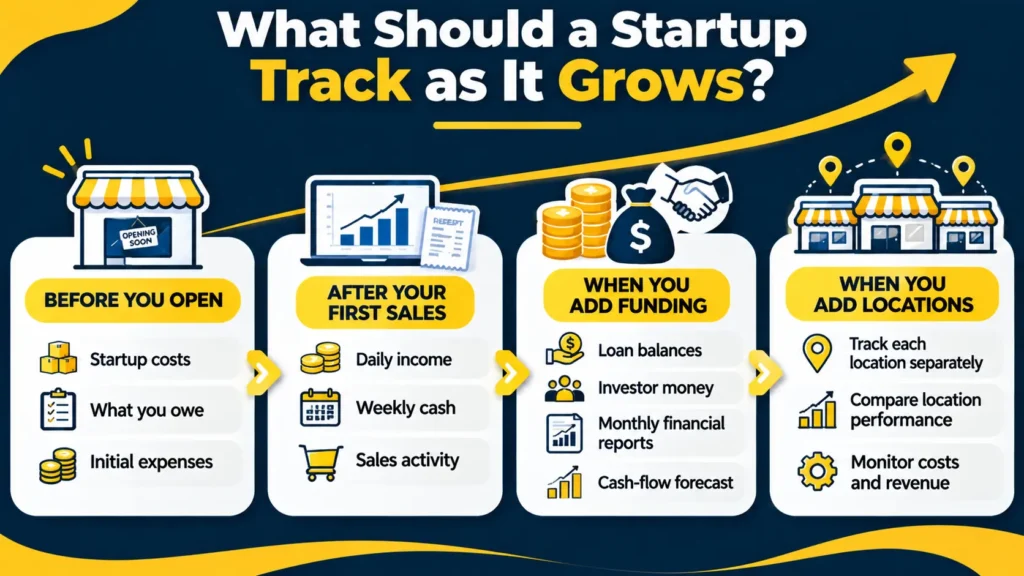
In practice, track your startup costs and what you owe before you open. After your first sales, track daily income and weekly cash. Once you take a loan or investor money, add monthly reports and a simple forecast of the next few months. If you open a second site, you will want each site tracked on its own, which is where multi-location bookkeeping becomes useful.
Which Bookkeeping Tasks Come Every Week and Every Month?
Each week, record and sort your transactions and save your receipts. Each month, reconcile your bank and card accounts, check what customers owe you and what you owe others, review payroll, and read your reports. Reconciling means matching your books to your bank statements and finding the reason for any gap.
Doing the same tasks on the same days keeps small errors from piling up, and it makes the work easy to hand off later. You can follow our monthly bookkeeping checklist for the full step-by-step list of what to finish before you close each month.
Bookkeeping Example: A New Franchise Startup’s First Month
In its first month, a new franchise shows how sales, card fees, and royalties turn into a real profit number. Say you open a fitness studio franchise and pay a $30,000 franchise fee before opening. That fee is usually recorded as an asset and not as a one-time expense, so ask your accountant how to handle it in your case.
In month one, your studio makes $20,000 in sales, all paid by card. The card company keeps a $600 fee and sends $19,400 to your bank. Your sales report says $20,000 and your bank says $19,400, and the $600 gap is the fee. You record it as an expense, and now both match.
Your franchise agreement asks for a 6% royalty, which is $1,200. You also pay $4,000 in rent, $7,000 in staff pay, and $1,500 for supplies and other costs. Your total costs come to $14,300, so your profit is $5,700. The royalty rate here is only an example. Without this check, you might think you earned $19,400, or you might forget the royalty and think your profit was $6,900. Both numbers would lead you to the wrong decision.
What Bookkeeping Mistakes Do Startups Make Most Often?
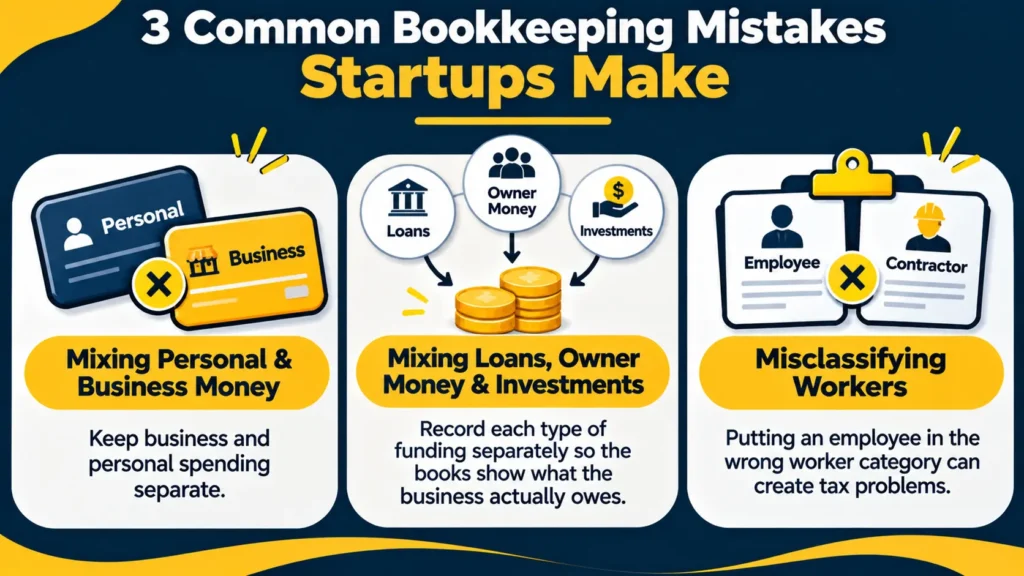
The most common mistakes are mixing personal and business money, mixing up loans and owner money, and putting workers in the wrong group. If you pay a business bill with a personal card, record it so it is clear that the business owes you.
Money you put in yourself, money you borrow, and money from investors are three different things, and each needs its own account. Blending them hides what the business really owes. Another common error is calling a worker a contractor when the law may treat that person as an employee, which can lead to tax trouble. Many founders also skip small costs before opening, like permits and tools, and later cannot say what they spent.
Should You Do It Yourself, Use Software, or Hire a Bookkeeper?
Do it yourself if you have few transactions and a free hour each week. Hire help when you miss reconciliations, run more than one location, or need clean reports for a lender or an investor. Software saves time because it pulls in bank data, but you still have to check what it suggests.
Signs that it is time for help are simple. You are a month or more behind, you feel unsure about your cash, or bookkeeping takes hours you need for customers. Remote support can work well here, and our guide on what a virtual bookkeeper does explains how the service runs day to day and what to check before you sign.
What Should Stay in the Founder’s Hands?
Payment approval, bank access, and report review should stay with you. Your bookkeeper can record, match, and prepare, but you should decide what gets paid. Keep control of your bank logins, and approve any change to a vendor’s payment details.
Read your reports every month and ask about anything that looks odd. This keeps you in charge and lowers the chance that fraud or honest mistakes go unseen.
How Much Does Startup Bookkeeping Cost?
The cost depends on how much work your books need, not on one fixed price. Things that raise the price include more transactions, more locations, payroll, and older records that need cleanup. Software has its own monthly fee, and a bookkeeper or firm adds a service fee on top.
When you compare offers, check that each one covers the same work, such as reports, payroll, and sales tax. A low price that leaves out half the tasks is not really cheaper. Ask for a written list of what is included.
How Do You Choose the Right Bookkeeper for a Startup?
Pick someone who understands your type of business, explains their process clearly, and puts the scope in writing. Ask how they would handle a payment that does not match an invoice. A good answer has clear steps and not just a promise.
Ask who your main contact will be and how they protect your data. Warning signs include vague answers, no written scope, or a request for full control of your bank account. If you run a franchise, also ask whether they know how to track royalties and prepare franchisor reports.
How Do You Catch Up When Your Startup’s Books Are Behind?
Start with the oldest missing month and work forward one month at a time. Handle payroll and sales tax first, since those carry deadlines and penalties. For each month, gather your statements, sort the transactions, and reconcile every account.
If the pile is large, a bookkeeper can clean it up faster and set up a routine so you stay current.
Conclusion
Good bookkeeping gives a startup a clear view of its cash, its costs, and its next steps. Set up separate accounts, pick a method that fits, keep a weekly and monthly routine, and read your reports. If the work starts to slip, get help early, before small gaps turn into large ones.
Discuss Your Startup Bookkeeping Needs With BeanSquad
If you are starting a franchise or growing one, BeanSquad can set up your books and keep them on schedule. Tell us where your records stand today, and we will suggest a simple plan. To get started, contact us for a free consultation.
Frequently Asked Questions
Can a Startup Keep Its Books in a Spreadsheet?
Yes, a startup can manage its bookkeeping in a spreadsheet when it has only a few transactions. As the business grows, a bookkeeper can help maintain accurate records, reconcile accounts, and prepare financial reports.
When Should a Startup Switch to Accrual Accounting?
A startup should consider accrual accounting when it starts selling on credit, holding inventory, or working with lenders and investors. This method records income and expenses when they occur rather than when money changes hands.
Can a Bookkeeper File My Business Taxes?
Not always. Some bookkeeping firms offer tax filing services, while others only maintain financial records. Check the service agreement to see what is included.
Does a New Franchise Owner Need a Bookkeeper Who Knows Franchise Reporting?
Yes, a franchise owner can benefit from a bookkeeper who understands franchise reporting. They can track royalties, follow the franchisor’s account categories, and prepare required financial reports.
How Long Does It Take to Clean Up Messy Startup Books?
The time depends on how many months of records are missing and how much information is available. Missing statements and unrecorded transactions can make the process longer.
Can I Keep My Current Accountant?
Yes, you can keep your current accountant when hiring a bookkeeper. The bookkeeper maintains your financial records, while your accountant uses them for tax returns and financial advice.